1. परिचय एवं अवलोकन
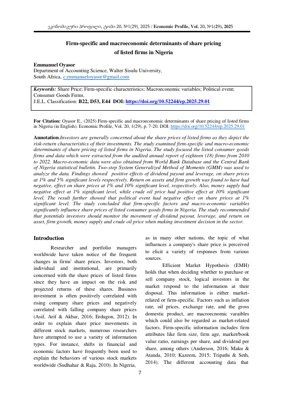
यह अध्ययन नाइजीरियाई स्टॉक एक्सचेंज में सूचीबद्ध उपभोक्ता वस्तु कंपनियों के शेयर मूल्यों के निर्धारकों की जांच करता है। यह अध्ययन कुशल बाजार परिकल्पना पर आधारित है, जो मानती है कि शेयर की कीमतें सभी उपलब्ध सूचनाओं को दर्शाती हैं, जिन्हें कंपनी-विशिष्ट (आंतरिक) सूचना या बाजार-संबंधित (बाहरी/मैक्रोइकॉनॉमिक) सूचना के रूप में वर्गीकृत किया जा सकता है। यह अध्ययन इन दो व्यापक श्रेणियों के प्रभावों को स्पष्ट करने का लक्ष्य रखता है, ताकि अत्यधिक अस्थिर नाइजीरियाई शेयर बाजार में काम करने वाले निवेशकों, पोर्टफोलियो प्रबंधकों और नीति निर्माताओं के लिए अंतर्दृष्टि प्रदान की जा सके।
कई अन्य उभरती अर्थव्यवस्थाओं की तरह, नाइजीरिया की पूंजी बाजार में उच्च अस्थिरता है और यह कॉर्पोरेट आंतरिक प्रदर्शन और बाहरी झटकों दोनों के प्रति अत्यधिक संवेदनशील है। निवेश निर्णय और पूंजी आवंटन दक्षता के लिए शेयर मूल्य परिवर्तनों के सटीक चालकों को समझना महत्वपूर्ण है।
2. अनुसंधान पद्धति
इस अध्ययन ने 13 वर्षों (2010-2022) के डेटा का विश्लेषण करने के लिए एक मजबूत पैनल डेटा पद्धति को नियोजित किया।
2.1 डेटा एवं नमूना
नमूने में नाइजीरिया की 18 सूचीबद्ध उपभोक्ता वस्तु कंपनियां शामिल हैं। कंपनी-विशिष्ट डेटा (जैसे लाभांश भुगतान अनुपात, लीवरेज, संपत्ति पर प्रतिफल) ऑडिटेड वार्षिक रिपोर्टों से निकाला गया। मैक्रोइकॉनॉमिक डेटा (जैसे मुद्रा आपूर्ति, कच्चे तेल की कीमतें) वर्ल्ड बैंक डेटाबेस और सेंट्रल बैंक ऑफ नाइजीरिया के सांख्यिकीय बुलेटिन से प्राप्त किया गया।
2.2 अनुभवजन्य मॉडल एवं चर
मुख्य अनुभवजन्य मॉडल शेयर की कीमत (आश्रित चर) को निम्नलिखित चरों के एक फलन के रूप में मानता है:
- कंपनी-विशिष्ट चर: लाभांश भुगतान अनुपात, लीवरेज (ऋण-इक्विटी अनुपात), संपत्ति पर प्रतिफल, कंपनी की वृद्धि (जैसे संपत्ति वृद्धि)।
- व्यापक आर्थिक चर: मुद्रा आपूर्ति (M2), कच्चे तेल की कीमत।
- राजनीतिक चर: एक आभासी चर जो प्रमुख राजनीतिक घटनाओं (जैसे चुनाव) को दर्शाता है।
मॉडल में नियंत्रण चर के रूप में कंपनी के आकार और आयु को भी शामिल किया गया है।
2.3 अनुमान तकनीक: दो-चरणीय प्रणाली GMM
为了解决潜在的内生性问题(例如,过去的股价影响当前的公司决策)和未观测到的公司异质性,本研究采用了由Arellano & Bover (1995) 和 Blundell & Bond (1998) 开发的दो-चरणीय प्रणाली सामान्यीकृत क्षण विधि (GMM) का उपयोग किया।यह तकनीक विशेष रूप से "समय आयाम छोटा, क्रॉस-सेक्शन आयाम लंबा" विशेषताओं वाले गतिशील पैनल मॉडल के लिए उपयुक्त है, और लैग्ड आश्रित चर की उपस्थिति में सुसंगत अनुमानक प्रदान करती है।
3. अनुभवजन्य परिणाम और विश्लेषण
GMM अनुमान ने कई निर्धारकों के लिए सांख्यिकीय रूप से महत्वपूर्ण परिणाम दिए।
3.1 कंपनी-विशिष्ट निर्धारक
सकारात्मक प्रभाव
लाभांश भुगतान: 1% स्तर पर एक महत्वपूर्ण सकारात्मक प्रभाव है। यह वित्तीय स्वास्थ्य और शेयरधारक रिटर्न का संकेत देता है, जिससे निवेशक विश्वास बढ़ता है।
लीवरेज: 5% स्तर पर एक महत्वपूर्ण सकारात्मक प्रभाव है। इसे विकास संभावनाओं और कर लाभ के संकेत के रूप में व्याख्यायित किया जा सकता है, हालांकि उच्च लीवरेज जोखिम का संकेत भी दे सकता है।
नकारात्मक प्रभाव
संपत्ति पर प्रतिफल: 1% स्तर पर सांख्यिकीय रूप से महत्वपूर्ण नकारात्मक प्रभाव दर्शाता है। यह एक प्रतिज्ञानातीत निष्कर्ष है, जो संकेत देता है कि इस उद्योग की उच्च लाभप्रदता बाजार में इसकी स्थिरता या भविष्य के निवेश की आवश्यकताओं के प्रति चिंता उत्पन्न कर सकती है, या फिर लाभ को प्रभावी ढंग से संप्रेषित या वितरित नहीं किया गया है।
कंपनी की वृद्धि: 10% स्तर पर सांख्यिकीय रूप से महत्वपूर्ण नकारात्मक प्रभाव दर्शाता है। तीव्र वृद्धि को उच्च जोखिम या भारी भविष्य की पूंजीगत व्यय की आवश्यकता के रूप में देखा जा सकता है, जो वर्तमान मूल्यांकन को दबा सकता है।
3.2 व्यापक आर्थिक और राजनीतिक निर्धारक
सकारात्मक प्रभाव
कच्चे तेल की कीमत: 10% स्तर पर सांख्यिकीय रूप से महत्वपूर्ण सकारात्मक प्रभाव दर्शाता है। नाइजीरिया के एक प्रमुख निर्यात के रूप में, उच्च तेल कीमतें विदेशी मुद्रा भंडार, समष्टि आर्थिक स्थिरता और समग्र निवेशक भावना में सुधार करती हैं।
नकारात्मक प्रभाव
मुद्रा आपूर्ति (M2): 1% स्तर पर एक महत्वपूर्ण नकारात्मक प्रभाव दिखाता है। यह संकेत दे सकता है कि मुद्रा आपूर्ति में वृद्धि मुद्रास्फीति के दबाव से जुड़ी है, जो वास्तविक रिटर्न को कम करती है और मूल्यांकन मॉडल में छूट दर को बढ़ाती है, जिससे शेयर की कीमतों पर नकारात्मक प्रभाव पड़ता है।
राजनीतिक घटनाएँ: 1% स्तर पर एक महत्वपूर्ण नकारात्मक प्रभाव दिखाता है। चुनाव और राजनीतिक अनिश्चितता नीतिगत जोखिम लाती है, विदेशी निवेश में बाधा डालती है, और देश के जोखिम प्रीमियम को बढ़ाती है, जिससे शेयर बाजार पर प्रतिकूल प्रभाव पड़ता है।
4. मुख्य अंतर्दृष्टि और चर्चा
- नाइजीरिया के उपभोक्ता वस्तु उद्योग में, बाजार लेखांकन लाभ (ROA) की तुलना में तत्काल नकद रिटर्न (लाभांश) को प्राथमिकता देता है।
- तेल की कीमतों और राजनीतिक स्थिरता द्वारा दर्शाई गई स्थिर मैक्रोइकॉनॉमिक स्थितियाँ, सकारात्मक शेयर मूल्यांकन प्राप्त करने के लिए एक महत्वपूर्ण पूर्व शर्त हैं।
- मुद्रा आपूर्ति में तेजी से वृद्धि करने वाली मौद्रिक नीति को शेयर बाजार द्वारा नकारात्मक रूप से देखा जाता है।
- निष्कर्ष शुद्ध कुशल बाजार परिकल्पना का आंशिक रूप से समर्थन करते हैं लेकिन उसे चुनौती भी देते हैं, जो उभरती अर्थव्यवस्थाओं के संदर्भ में व्यवहारिक कारकों और विशिष्ट बाजार अक्षमताओं को उजागर करता है।
5. निष्कर्ष और सुझाव
यह अध्ययन इस निष्कर्ष पर पहुंचता है कि कंपनी-विशिष्ट चर और व्यापक आर्थिक/राजनीतिक चर दोनों ही नाइजीरिया में सूचीबद्ध उपभोक्ता वस्तु कंपनियों के शेयर मूल्यों के महत्वपूर्ण निर्धारक हैं।
सुझाव:
- निवेशकों के लिए: इस उद्योग में निवेश निर्णय लेते समय, लाभांश नीति, लीवरेज अनुपात, मुद्रा आपूर्ति रुझान, कच्चे तेल की कीमतों और राजनीतिक कार्यक्रम पर बारीकी से ध्यान देना चाहिए।
- कंपनी के लिए: एक पारदर्शी और स्थायी लाभांश नीति बनाए रखें, और बाजार को लाभप्रदता और विकास संकेतकों के पीछे की रणनीतिक तर्क प्रभावी ढंग से संप्रेषित करें।
- नीति निर्माताओं के लिए: एक स्वस्थ पूंजी बाजार को बढ़ावा देने के लिए, व्यापक आर्थिक स्थिरता को प्राथमिकता दें, मुद्रास्फीति का प्रबंधन करें, और एक अनुमानित राजनीतिक वातावरण सुनिश्चित करें।
6. विश्लेषक परिप्रेक्ष्य: मुख्य अंतर्दृष्टि, तार्किक संरचना, शक्तियाँ और कमियाँ, क्रियान्वयन योग्य सुझाव
मुख्य अंतर्दृष्टि: यह लेख नाइजीरियाई शेयर बाजार के एक महत्वपूर्ण और चिंताजनक सत्य को उजागर करता है:संकेत सार से अधिक महत्वपूर्ण हैं, स्थूल अराजकता सूक्ष्म उत्कृष्टता पर हावी हो जाती है। ROA और शेयर की कीमत के बीच नकारात्मक संबंध एक खतरे का संकेत है, जो दर्शाता है कि बाजार को रिपोर्ट किए गए मुनाफे पर भरोसा नहीं है, या यह मानता है कि अल्पकालिक नकदी (लाभांश) विकास के लिए रखे गए अर्जित आय की तुलना में कहीं अधिक मूल्यवान है। यह बाजार की ऐसी तस्वीर पेश करता है जहां निवेशक सतर्क हैं, भविष्य के मुनाफे से प्रेरित विकास के वादों पर भरोसा करने के बजाय तत्काल उपलब्ध लाभांश को प्राथमिकता देते हैं; पूरा बाजार तंत्र तेल की कीमतों और राजनीतिक रुझानों के अधीन है।
तार्किक प्रवाह: तर्क की संरचना कठोर और पद्धति मजबूत है। यह प्रभावी बाजार परिकल्पना से शुरू होकर, नाइजीरिया के संदर्भ को सही ढंग से एक ऐसे बाजार के रूप में पहचानता है जहां दोनों प्रकार के सूचना समुच्चय महत्वपूर्ण हैं, और अंतर्जातिता के मुद्दे को संभालने के लिए उपयुक्त उन्नत अर्थमितीय तकनीक (सिस्टम GMM) का उपयोग करता है - यह इस प्रकार के शोध में एक सामान्य चुनौती है। परिकल्पना से लेकर चर चयन, अनुमान और व्याख्या तक की प्रक्रिया स्पष्ट है।
शक्तियाँ और कमियाँ: मुख्य शक्ति सिस्टम GMM के अनुप्रयोग में है, जो मूल OLS या निश्चित प्रभाव मॉडल से आगे बढ़कर विश्वसनीयता बढ़ाता है। नाइजीरिया के संदर्भ के लिए राजनीतिक आभासी चर को शामिल करना एक बुद्धिमान कदम है। हालाँकि, कमियाँ स्पष्ट हैं। सबसे पहले, "राजनीतिक घटना" चर एक मोटा उपकरण हो सकता है; नीतिगत अनिश्चितता सूचकांक (जैसे Economic Policy Uncertainty Index) को मापना अधिक परिष्कृत होता। दूसरा, नमूना केवल एक उद्योग (उपभोक्ता वस्तु) तक सीमित है, जो केंद्रित तो है लेकिन सामान्यता को सीमित करता है। क्या "ROA विरोधाभास" बैंकों या प्रौद्योगिकी कंपनियों पर लागू होता? तीसरा, इस अध्ययन के निष्कर्षों को अधिक स्थिर उभरते बाजारों (जैसे केन्या, दक्षिण अफ्रीका) में समान शोध से तुलना करके "नाइजीरिया-विशिष्ट" जोखिम प्रीमियम को अलग करने का अवसर चूक गया है।
क्रियान्वयन योग्य सुझाव: चतुर निवेशकों के लिए, यह शोध एक रणनीति पुस्तिका है।1.) लाभांश पर लॉन्ग जाएँ, मुनाफे पर सवाल उठाएँ: उपभोक्ता सामान कंपनियों को उच्च और स्थिर भुगतान अनुपात के साथ फ़िल्टर करें, लेकिन उच्च-लाभ वाली कंपनियों के ROA के पीछे नकदी प्रवाह की गहराई से जाँच करें — क्या यह संचालन से है या परिसंपत्ति बिक्री से?2.) मैक्रो कैलेंडर का व्यापार करें: एक रणनीतिक परिसंपत्ति आवंटन मॉडल बनाएं जो प्रमुख चुनावों से 6-12 महीने पहले नाइजीरियाई शेयरों में एक्सपोजर कम करे और तेल की कीमतों में वृद्धि व कड़ी मौद्रिक नीति के सह-अस्तित्व के दौरान एक्सपोजर बढ़ाए।3.) बेहतर मेट्रिक्स की वकालत करें: एक विश्लेषक के रूप में, कंपनियों को मूल्य-आधारित मेट्रिक्स जैसे इकोनॉमिक वैल्यू एडेड को अपनाने और उसे ROA के साथ-साथ प्रमुखता देने के लिए प्रेरित करें, ताकि बाजार द्वारा स्पष्ट रूप से इंगित विश्वसनीयता के अंतर को पाटा जा सके। यह शोध न केवल बाजार की व्याख्या करता है, बल्कि आपको उसकी विशेषताओं को नेविगेट करने — और संभवतः उनका लाभ उठाने — के लिए उपकरण भी प्रदान करता है।
7. तकनीकी परिशिष्ट
7.1 गणितीय सूत्र
दो-चरण प्रणाली GMM अनुमान द्वारा अनुमानित गतिशील पैनल डेटा मॉडल को इस प्रकार व्यक्त किया जा सकता है:
$SP_{it} = \alpha + \beta_1 SP_{i,t-1} + \sum_{k=2}^{K} \beta_k X_{k,it}^{Firm} + \sum_{m=1}^{M} \gamma_m Y_{m,t}^{Macro} + \delta PolEvent_t + \eta_i + \epsilon_{it}$
जहाँ:
- $SP_{it}$: वर्ष $t$ में फर्म $i$ का शेयर मूल्य।
- $SP_{i,t-1}$: एक अवधि पूर्व का शेयर मूल्य (गतिशील समायोजन को दर्शाता है)।
- $X_{k,it}^{Firm}$: समय $t$ पर फर्म $i$ के $K$ फर्म-विशिष्ट चरों का सदिश।
- $Y_{m,t}^{Macro}$: समय $t$ पर $M$ व्यापक आर्थिक चरों का सदिश (सभी फर्मों के लिए समान)।
- $PolEvent_t$: राजनीतिक घटना डमी चर।
- $\eta_i$: अवलोकित फर्म-विशिष्ट निश्चित प्रभाव।
- $\epsilon_{it}$: विशिष्ट त्रुटि पद।
- $\alpha, \beta, \gamma, \delta$: अनुमानित किए जाने वाले पैरामीटर।
सिस्टम GMM अनुमानक, अंतर्जातिता की समस्या को हल करने के लिए जो अवशिष्ट आश्रित चर और अन्य संभावित अंतर्जात प्रतिगमन चरों से उत्पन्न होती है, अंतर समीकरण के लिए उपकरण चर के रूप में लैग स्तर मानों का और स्तर समीकरण के लिए उपकरण चर के रूप में लैग अंतर मानों का उपयोग करता है।
7.2 विश्लेषणात्मक ढांचा: एक व्यावहारिक उदाहरण
परिदृश्य: 2024 की चौथी तिमाही में, 2025 के चुनावों से पहले, एक विश्लेषक दो काल्पनिक नाइजीरियाई उपभोक्ता वस्तु कंपनियों: "स्टेबल डिविडेंड लिमिटेड" और "ग्रोथ स्टार लिमिटेड" का मूल्यांकन करता है।
रूपरेखा का अनुप्रयोग:
- कंपनी-विशिष्ट स्कोरिंग:
- स्थिर लाभांश: उच्च लाभांश भुगतान अनुपात (70%), मध्यम लीवरेज (0.6), मध्यम ROA (8%), कम वृद्धि (5%)।स्कोर: + (सकारात्मक कारक प्रभावी)।
- विकास सितारा: कम भुगतान अनुपात (20%), कम लीवरेज (0.3), उच्च ROA (15%), उच्च वृद्धि (25%)।स्कोर: - (अनुसंधान के अनुसार, उच्च ROA/वृद्धि को नकारात्मक रूप में देखा जाता है)।
- मैक्रो/राजनीतिक ओवरले विश्लेषण:
- तेल की कीमतों में उतार-चढ़ाव है लेकिन गिरावट का रुझान है।
- राजकोषीय व्यय के कारण, मुद्रा आपूर्ति वृद्धि अधिक है।
- चुनाव से संबंधित अनिश्चितता बढ़ रही है (राजनीतिक घटना डमी वेरिएबल = 1)।
- मैक्रो स्कोर: दृढ़ता से नकारात्मक।
- समग्र निर्णय मैट्रिक्स:
कंपनी कंपनी स्कोर मैक्रो स्कोर समग्र आउटलुक विश्लेषक कार्रवाई Stable Dividend Limited + -- Neutral to Slightly Negative Hold, but reduce position size due to macro headwinds. Growth Star Limited - -- Negative कम करें या बेचें। कंपनी की विशेषताओं को दंडित किया गया है, और व्यापक वातावरण ने जोखिम को बढ़ा दिया है।
यह सरलीकृत ढांचा शोध निष्कर्षों को एक क्रियान्वयनीय, पुनरावृत्त विश्लेषण प्रक्रिया में परिवर्तित करता है।
8. भविष्य के अनुसंधान एवं अनुप्रयोग की संभावनाएं
शोध दिशाएं:
- विश्लेषण को अन्य उद्योगों (वित्त, औद्योगिक, प्रौद्योगिकी) तक विस्तारित करना, ताकि "ROA विरोधाभास" की सार्वभौमिकता की जांच की जा सके।
- अधिक जटिल राजनीतिक जोखिम मापकों को शामिल करना, उदाहरण के लिएआर्थिक नीति अनिश्चितता सूचकांकया प्राकृतिक भाषा प्रसंस्करण पर आधारित आर्थिक नीति संबंधी समाचारों की भावना विश्लेषण।
- मशीन लर्निंग तकनीकों (जैसे रैंडम फॉरेस्ट, ग्रेडिएंट बूस्टिंग) का उपयोग करके निर्धारक कारकों के बीच गैर-रैखिक संबंधों और अंतःक्रिया प्रभावों को मॉडल करना, जिन्हें शास्त्रीय अर्थमिति द्वारा नजरअंदाज किया जा सकता है।
- संस्थागत और देश-विशिष्ट प्रभावों को अलग करने के लिए कई अफ्रीकी एक्सचेंजों पर तुलनात्मक अध्ययन करना।
अनुप्रयोग संभावनाएँ:
- "नाइजीरियाई इक्विटी जोखिम डैशबोर्ड" विकसित करना: निवेशकों के लिए एक रियल-टाइम डैशबोर्ड विकसित करना जो इस अध्ययन के प्रमुख संकेतकों को एकीकृत करे: कंपनी भुगतान/उत्तोलन रुझान, मुद्रा आपूर्ति वृद्धि, तेल कीमत पूर्वानुमान और राजनीतिक घटनाओं का कैलेंडर।
- ESG एकीकरण: भविष्य के मॉडल पर्यावरण, सामाजिक और शासन स्कोर को फर्म-विशिष्ट निर्धारकों के रूप में एकीकृत कर सकते हैं। नाइजीरिया जैसे संसाधन-संपन्न लेकिन शासन चुनौतियों वाले संदर्भ में, मजबूत शासन स्कोर राजनीतिक जोखिम धारणा को कम कर सकता है।
- नियामक अनुप्रयोग: नाइजीरिया के केंद्रीय बैंक और प्रतिभूति विनिमय आयोग मुद्रा आपूर्ति के नकारात्मक प्रभावों की अंतर्दृष्टि का उपयोग करके, मौद्रिक नीति और पूंजी बाजार स्थिरता लक्ष्यों के बीच बेहतर समन्वय स्थापित कर सकते हैं।
9. संदर्भ सूची
- Oyasor, E. (2025). Firm-specific and macroeconomic determinants of share pricing of listed firms in Nigeria. Economic Profile, 20(1), 7-20. https://doi.org/10.52244/ep.2025.29.01
- Arellano, M., & Bover, O. (1995). Another look at the instrumental variable estimation of error-components models. Journal of Econometrics, 68(1), 29-51.
- Blundell, R., & Bond, S. (1998). Initial conditions and moment restrictions in dynamic panel data models. Journal of Econometrics, 87(1), 115-143.
- Baker, S. R., Bloom, N., & Davis, S. J. (2016). Measuring Economic Policy Uncertainty. The Quarterly Journal of Economics, 131(4), 1593–1636. (EPU सूचकांक स्रोत).
- Maku, A. T., & Atanda, A. A. (2010). Determinants of Stock Market Performance in Nigeria: Long-run Analysis. Journal of Management and Society, 1(3), 46-55.
- Fama, E. F. (1970). Efficient Capital Markets: A Review of Theory and Empirical Work. The Journal of Finance, 25(2), 383–417. (कुशल बाजार परिकल्पना पर एक मौलिक कार्य).